Carbine - Basics (Start here)
-
The 3 Components To Aiming The Carbine
John breaks his explanation of carbine aiming into three parts. He compares red-dot and iron-sight references, discusses the relationship among the eyes, shoulders and rifle, and explains his use of “good eye” terminology. The lesson uses visual examples to introduce this part of his fundamentals...
-
Rifle Presentation (Always Do This)
John McPhee discusses rifle presentation and its connection to aiming. He examines head and eye position, finding the red dot, and the presentation issues he calls overdrive and underdrive. The lesson also references the thirds of aiming.
-
Proper Carbine Grip
John compares carbine grip with pistol grip and discusses the roles of the hands, arms and shoulder. He explains the terms “200% grip,” “cross-body pull” and “super push,” with a close look at the rifle's contact with the body. This is a focused presentation of his carbine grip framework and voca...
-
Carbine Stance Fundamentals
This carbine lesson presents John's stance framework through the analogy of a walk in mid-stride. He discusses foot position, knees, hips, shoulders and head, and explains why he treats stance as connected to mobility rather than as a fixed pose. The segment also compares the rifle's contact with...
-
Carbine Stance Drill
Following a short range demonstration, John reviews his target and connects the example to the carbine stance lesson. He discusses body movement and vertical stringing, using the footage and target as illustrations of his stance framework.
-
Stance - Mobility
In this brief range segment, John revisits his stance framework and the walking analogy used in the series. He reviews feet, hips, shoulders and visual alignment, then introduces the connection to mobility and timing. This is a short recap and transition to later movement topics, not a full movem...
-
Stance - Feet
Breaking down stance, let's start with the feet!
-
Stance - Genetic Parallax
This short lesson introduces John's term “genetic parallax.” He discusses visual perspective, the relationship between body position and the sight picture, and how the topic connects stance, grip and aiming. He also revisits what he calls the “trigger jerk myth.” A focused explanation of his term...
-
Stop the Re-Grip: Fix Your Stance, Find the Dot, and Super Push
This video-review session connects several parts of John's fundamentals framework. He discusses body position, red-dot visibility, firing-thumb movement and the relationship between the hands and shoulders. The review then focuses on regripping and “super push,” before closing with a brief discus...
-
Stance: Why You’re Missing High
John reviews how he represents stance on his range card and pie-chart graphic. He discusses vertical stringing, uses walking and balance analogies, and compares illustrated body positions with range examples. The closing example also revisits index, making this a crossover discussion of the terms...
-
Reading Targets: How to Diagnose Your Shooting Mistakes
John walks through targets collected over several range days and explains what he sees in the patterns. The review includes pistol and rifle examples, right- and left-handed references, and his terms for stance, grip, index, wobble and firing-thumb movement. He also discusses “super push” and sho...
-
Master Your Shot: How to Use the SOB Tactical Range Card
John “Shrek” McPhee introduces the front of the SOB Tactical Range Card and discusses how he interprets example shot groups. He explains the terms working edge, wobble, vertical stringing, righty grip and Super Push, and discusses stance, grip, firing shoulder and firing thumb in his commentary. ...
-
Pie Chart Garbage
John shows an early version of his own pie-chart drawing and recalls submitting it to a magazine. He explains how he labeled index, stance and right- or left-handed grip, while reflecting on how his interpretation developed. This is a brief look at the origins of his visual teaching framework.
-
The Carbine Placement Test
This archival range segment presents John's carbine placement test, followed by a look at his target and a recorded demonstration. John compares the carbine and pistol versions and comments on his own results. The episode is part of the placement-test series.
-
Scope and Eye Relief
This short classroom-style segment introduces eye relief and the rear focus ring. John compares optic examples, discusses reticle clarity and comments on changes he notices during a long day looking through a scope. The segment includes a reminder about eye protection.
-
Rifle Setup & Range Prep: Essential Gun Maintenance Tips
In this range-side question-and-answer video, John discusses his personal preferences for rifle accessories, including slings, red dots, scopes, lights and controls. The conversation covers his equipment choices and why he prefers them. This is an archival rifle-accessory discussion, not a cleani...
-
Eye Dominance Talk: Diagnosing and Fixing Vision Issues
Eye issues are a constant topic on and off the range. As we get older, changes in vision are inevitable. In this week's video, we tackle the crucial topic of eye dominance and vision problems. Learn how to diagnose your eye dominance and discover techniques to fix common vision issues that affect...
-
Eye Neutral
Are you primary hand, primary eye, or eye neutral? Are you cross eye dominate? Lets find out!
-
Bino Vision
What is "bino vision?" Do you possibly have bino vision? Check out this weeks video!
-
Boxer Vision
Do you have Boxer Vision? What is it and how can you minimize the effects?
-
LEFTY PRESENTATION: Carbine Video Diagnostics
John "Shrek" McPhee Analyzes left-handed presentation
-
PRESENTATION Video Diagnostics
John “Shrek” McPhee uses video diagnostics to review rifle presentation with a guest from Nemo Arms. The segment discusses ready positions, visibility, reaction time and the movement John calls “fishing for the sight.” It includes a range demonstration and recorded-footage review illustrating his...
-
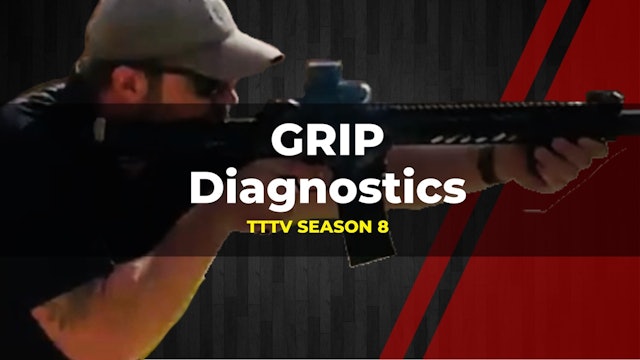
GRIP Video Diagnostics
Utilizing Coaches Eye to analyze the most important thing about proper grip.